
skin changes diabetes 20s warning sign on neck in mirror
Skin changes diabetes 20s? Dark neck or armpit patches may warn of insulin issues. Spot them early — your health matters.
Skin Changes Diabetes 20s: What You’re Seeing Might Not Just Be Skin Deep
Hey there! If you’re in your 20s and you’ve noticed weird dark patches on your neck, armpits, or even behind your knees, don’t just brush them off as dirt or sun tan. These skin changes, diabetes 20s folks often ignore… could actually be your body sending you a red flag.
Yes, you read that right.
It’s called acanthosis nigricans (say it like: uh-KAN-tho-sis ny-GRIK-ans). Fancy name, right? But what it really means is: your skin is reacting to something happening inside your body — usually insulin resistance. And that? That’s one of the earliest signs of type 2 diabetes.
Let’s break this down — simply, clearly, and without the scary medical jargon.
What Exactly Are These Skin Changes Diabetes 20s Folks Get?

So, picture this: you’re getting dressed and you notice your neck looks darker than usual. Or maybe your armpits feel thicker, almost velvety. You scrub, you wash — but it won’t go away. That’s not dirt. That’s acanthosis nigricans.
These patches are:
- Dark brown or black
- Velvety to touch
- Often found in skin folds (neck, armpits, groin, elbows)
- Not itchy or painful — which is why people ignore them
And here’s the thing — they’re not caused by poor hygiene. Nope. They’re caused by too much insulin in your blood. And too much insulin? That’s how diabetes starts.
Why Do Skin Changes Diabetes 20s Signal Trouble?

Okay, let’s get science-y — but super simple.
When you eat carbs or sugar, your body turns them into glucose (that’s blood sugar). Then, insulin (a hormone) helps move that sugar into your cells for energy.
But if you eat too much sugar or processed food for too long? Your cells stop listening to insulin. That’s called insulin resistance.
So your body panics. It makes MORE insulin to get the job done.
And guess what? Too much insulin tells your skin cells: “Hey! Grow faster!” That’s when those dark, thick patches show up.
Basically, your skin is waving a tiny flag saying: “Something’s off inside!”
According to the American Diabetes Association, insulin resistance can start as early as your teens or 20s — especially if you’re inactive, stressed, or eating lots of junk food.
Skin Changes Diabetes 20s: Who’s Most at Risk?
Not everyone gets these patches. But you’re more likely to see skin changes diabetes 20s if you:
- Have a family history of diabetes
- Are you overweight or carry extra weight around your belly
- Eat lots of sugary drinks or fast food
- Don’t move much (hello, binge-watching!)
- Have PCOS (common in young women)
Also, people with darker skin tones — like South Asian, African, or Hispanic backgrounds — may notice these patches more easily. But anyone can get them.
The good news? If you catch it early, you can turn things around.
Skin Changes Diabetes 20s: What Should You Do Next?

First — don’t panic. This isn’t a diagnosis. It’s a warning sign. Like your car’s “check engine” light.
Here’s your simple action plan:
1. Snap a Pic & Show Your Doctor
Seriously. Take a clear photo of the patch. Show it to your GP or a dermatologist. Say: “I read about skin changes diabetes 20s — could this be that?”
They might do a simple blood test — fasting blood sugar or HbA1c — to check your insulin levels.
2. Get Moving — Even a Little
You don’t need to run a marathon. Just walk 30 minutes a day. Dance in your room. Take stairs. Small steps add up.
Exercise helps your cells listen to insulin again. Magic, right?
3. Ditch the Sugar Bombs
Swap soda for water. Replace chips with nuts or fruit. Cut back on white bread, pasta, and sweets.
Your pancreas will thank you.
Need meal ideas? Check out Harvard’s Healthy Eating Plate — it’s super easy to follow.
Skin Changes Diabetes 20s: Can You Reverse It?
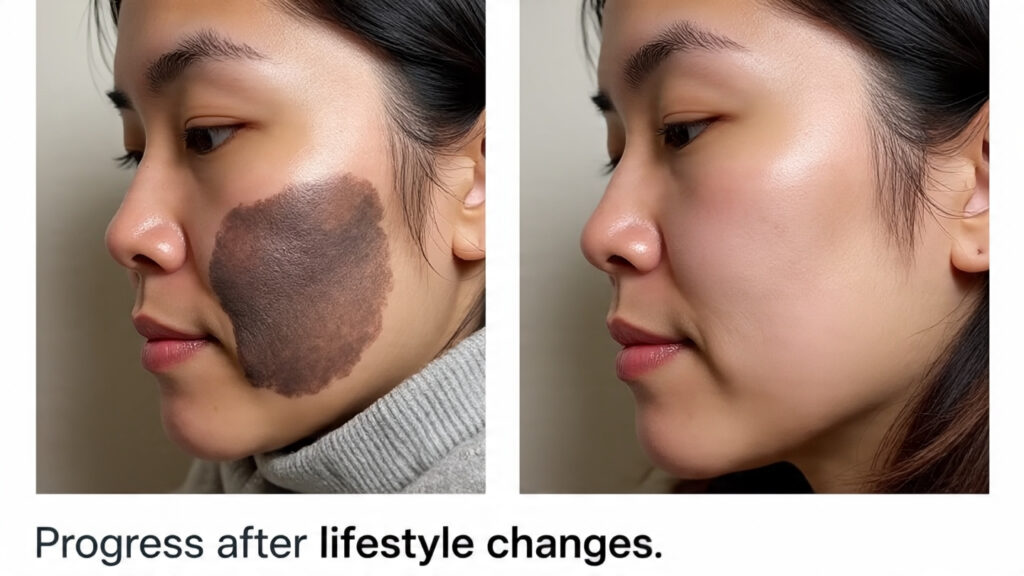
YES. 100%.
If you catch insulin resistance early — before full-blown diabetes — you can reverse it.
How?
- Lose just 5–7% of your body weight (if overweight)
- Move your body daily
- Sleep 7–8 hours (yes, sleep affects insulin!)
- Manage stress (deep breaths, walks, music — whatever calms you)
Many people see those dark patches fade in 3–6 months after making healthy changes.
One study even showed that lifestyle changes reduced diabetes risk by 58% — better than some medicines! (Source: CDC – Prevent Type 2 Diabetes )
Skin Changes Diabetes 20s: Myths vs Facts
Let’s clear up some confusion.
❌ Myth: Only older people get diabetes.
✅ Fact: Type 2 diabetes is rising FAST in people under 30. Skin changes diabetes 20s are an early clue.
❌ Myth: If I feel fine, I’m fine.
✅ Fact: Diabetes creeps in silently. No symptoms — until it’s advanced. Skin patches? That’s your early alarm.
❌ Myth: I’ll just use skin lightening cream.
✅ Fact: Creams won’t fix the root cause. Fix your insulin — and the skin fixes itself.
Skin Changes Diabetes 20s: Real Talk From Someone Who Noticed It
Meet Priya (not her real name). She’s 24, works a desk job, and loves bubble tea. One day, her little sister said, “Why is your neck dirty?” She scrubbed… nothing changed.
She Googled “dark neck skin” and landed on acanthosis nigricans. Got scared. Went to the doctor.
Blood test showed: pre-diabetes.
She cut out sugary drinks, started walking after dinner, and swapped white rice for brown. In 4 months? Her neck cleared up. Her blood sugar? Back to normal.
She says, “I’m so glad I didn’t ignore it. My skin saved me.”
Skin Changes Diabetes 20s: FAQs (You Asked, We Answered)
Q: Can these dark patches go away on their own?
A: Not really. They fade only when you fix the insulin issue. Healthy habits = clearer skin.
Q: Is this only linked to diabetes?
A: Mostly, yes. But rarely, it can be linked to hormone issues or even some medications. A doctor can help rule that out.
Q: I’m skinny — can I still get this?
A: Yes! Even thin people can have insulin resistance — especially if they eat lots of sugar or are super stressed.
Q: Should I panic if I see this?
A: No. But do act. It’s a gentle nudge from your body — not a death sentence.
Q: How soon should I see a doctor?
A: Within 2–4 weeks. Don’t wait. Early action = better results.
Final Thoughts: Your Skin Is Talking — Are You Listening?
Skin changes diabetes 20s aren’t just cosmetic. They’re clues. Secret messages from your body saying: “Hey, let’s fix this before it gets worse.”
You’re young. You’re strong. And you have the power to change this.
Don’t ignore that dark patch. Don’t call it “just skin.” See it. Snap it. Show it. Fix it.
Your future self will high-five you for it.
Related Articles
Unexplained Weight Loss Diabetes 20s? Act Fast Now
Tired all the time? Early diabetes symptoms in your 20s
Early Signs of Diabetes in Women — Spot Them Now
Type 2 Diabetes in 20s: Why It’s Rising & How to Stop It
Fatigue and Diabetes in Young Adults — Test Now, Not Later
Frequent urination and thirst, diabetes: check your sugar now
Blurred Vision Diabetes Young Adults? Get Checked Now
Slow Healing Wounds Diabetes Young? Check Sugar Now






I don’t think the title of your article matches the content lol. Just kidding, mainly because I had some doubts after reading the article. https://accounts.binance.com/es/register-person?ref=RQUR4BEO
Can you be more specific about the content of your article? After reading it, I still have some doubts. Hope you can help me. https://www.binance.info/da-DK/register?ref=V3MG69RO