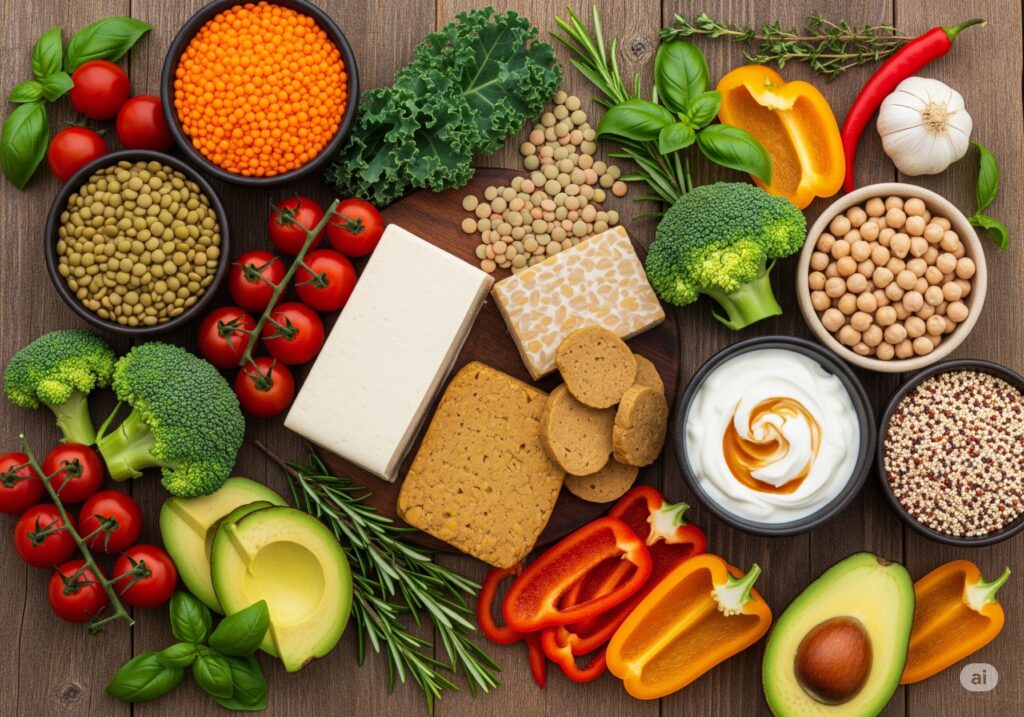
Vegan and vegetarian protein sources arranged on a wooden table
Discover 7 vegan & vegetarian protein sources that aid weight loss and muscle health, with serving ideas, science-backed tips, and helpful links.
7 Best Vegan & Vegetarian Protein Sources for Weight Loss and Muscle Health
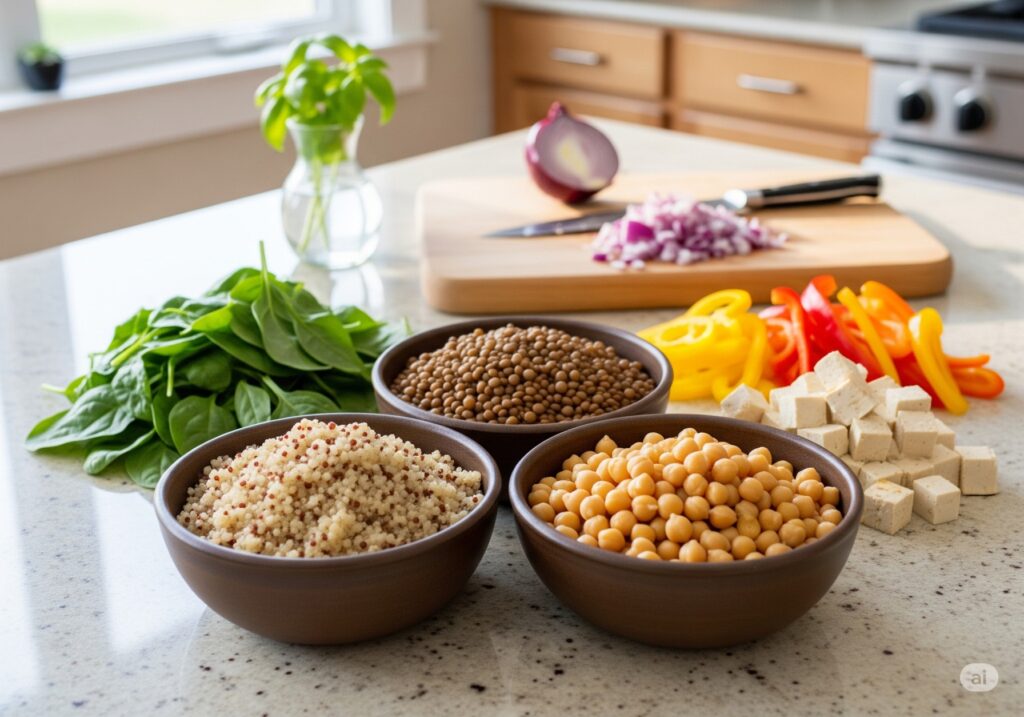
Want to eat more plants and still hit your protein goals? Good news. You can absolutely lose weight, protect muscle, and even build it with smart plant-forward choices. Below are seven high-impact picks, plus why they work and how to use them. I’ve kept portions practical, the tips simple, and the science linked so you can dig deeper.
Why protein matters for weight loss and muscle
Higher-protein eating can help you feel full, burn a few extra calories during digestion, and preserve lean muscle while dieting. This satiety and “thermic effect” edge shows up across many studies and reviews. PubMed, PMC, BioMed Central
For muscle gain, spacing your protein over meals helps. Research suggests aiming for roughly 0.4 g/kg per meal to reach about 1.6 g/kg/day, especially when you train. Leucine—an amino acid—acts like an “on” switch for muscle protein synthesis, which is why quality and dose at each meal matter. BioMed Central, PMC, ScienceDirect
1) Lentils: budget-friendly powerhouse
Why they’re great: Lentils deliver protein, iron, and loads of fiber for fullness. One cooked cup offers around 17–18 g of protein. Because they’re hearty, they make cutting calories easier without feeling deprived. My Food Data
How to use: Stir into tomato-based curries, toss with roasted veggies, or make a quick dal with spinach.
Learn more: Cooked lentils nutrition (MyFoodData).
2) Chickpeas: versatile and satisfying
Why they’re great: Chickpeas offer protein plus resistant starch and fiber, which support appetite control. A cooked cup provides roughly 14–15 g of protein. Beans in general are strongly linked with satiety and healthy weight management. University of Rochester Medical Center, EatingWell
How to use: Roast with spices for a crunchy snack, blend into hummus, or fold into salads.
Learn more: Chickpeas nutrition (MyFoodData); evidence on beans and weight control: EatingWell explainer.
3) Tofu: the ultra-flexible complete protein
Why it’s great: Soy is a complete protein with all essential amino acids. Firm tofu typically provides around 8–10 g of protein per ½ cup and soaks up any flavor. It’s easy to hit your per-meal protein target when you build bowls, scrambles, or stir-fries around it. Healthline
How to use: Press, marinate, then pan-sear; or crumble for a high-protein scramble.
Learn more: Tofu/soy overview (overview article).
4) Tempeh: fermented and extra filling
Why it’s great: Tempeh is firmer and higher in protein than tofu—~15–18 g per ½ cup—and fermentation adds gut-friendly compounds. It’s a staple for muscle-minded vegans because it’s dense and easy to hit 25–30 g in a meal. Medical News Today, Verywell Health
How to use: Slice, steam 5 minutes to reduce bitterness, then sauté with a savory glaze.
Learn more: Tempeh protein.
5) Seitan: high protein, meat-like texture (not gluten-free)
Why it’s great: Made from wheat gluten, seitan packs about 25 g of protein per 100 g—exceptional for a plant food—and cooks like strips or cutlets. If you tolerate gluten, it’s a convenient way to get a hefty dose per bite. Massachusetts General Hospital
How to use: Pan-sear with fajita spices, simmer in a curry, or air-fry as “tenders.”
Learn more: Seitan nutrition spotlight.
6) Quinoa: protein + fiber base for balanced bowls
Why it’s great: Quinoa is a complete protein and provides about 8 g of protein per cooked cup, plus fiber. It’s not the highest-protein food on this list, yet it’s an ideal base to help you build balanced, filling meals that support weight goals. The Nutrition Source, PMC
How to use: Mix half-and-half with lentils, pile on veggies, and top with tofu or tempeh to reach that 25–35 g “anabolic” zone at lunch.
Learn more: Harvard Nutrition Source on quinoa.
7) Greek yogurt (vegetarian): high-protein dairy option
Why it’s great: For vegetarians who include dairy, plain nonfat Greek yogurt offers about 17–20 g of protein per 170 g (≈6–7 oz). It’s convenient, high in calcium, and pairs well with fruit and nuts for a balanced snack. My Food Data
How to use: Make a savory raita with cucumber and mint, or a sweet bowl with berries and a sprinkle of seeds.
Learn more: Greek yogurt nutrition.
How to assemble meals that work (and why)
Use vegan and vegetarian protein sources at every meal
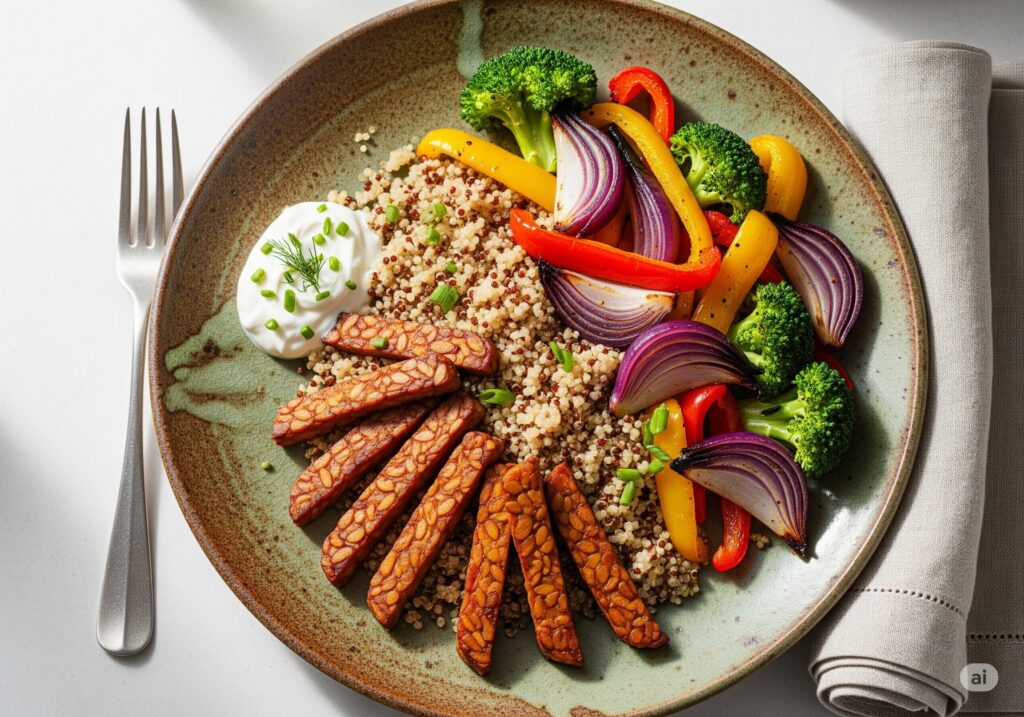
Aim to include a core protein (like tofu or lentils) plus supportive sides (whole grains, veggies). Spreading protein across the day—breakfast, lunch, dinner, and a snack—helps muscle repair and appetite control. A practical target is ~0.4 g/kg per meal. BioMed Central
Hit the leucine “on-switch”
Leucine helps trigger muscle protein synthesis. Meals with 20–30 g protein from quality sources typically provide enough leucine for most people, especially when resistance training is in the mix. ScienceDirect
Keep an eye on fiber and fullness
Legumes like lentils and chickpeas deliver protein and fiber. That combo delays gastric emptying, raises satiety, and can reduce overall calorie intake—useful for weight loss without the constant “I’m hungry” feeling. The Nutrition Source. BioMed Central
Sample day using vegan and vegetarian protein sources
- Breakfast: Greek yogurt bowl (or tofu “yogurt” if vegan) with berries and pumpkin seeds.
- Lunch: Quinoa-lentil bowl with roasted vegetables and tahini-lemon dressing.
- Snack: Roasted chickpeas or edamame.
- Dinner: Tempeh stir-fry over cauliflower-quinoa rice; or seitan fajitas with peppers and onions.
Want recipe inspiration and deeper nutrition breakdowns? Try these resources:
- Harvard Nutrition Source: Protein & weight control. The Nutrition Source
- JISSN review on per-meal protein targets. BioMed Central
- Clinical review: high-protein diets, weight loss, and body composition. Jomes
Quick FAQs
Do I need “complete” proteins every time?
Not necessarily. Eat a variety over the day—grains + legumes + seeds cover your bases. However, soy foods and quinoa are convenient “complete” options when you want one-stop coverage. Healthline, The Nutrition Source
Can plant protein really support muscle?
Yes. The key is total daily protein, per-meal dose, and progressive resistance training. Soy, legumes, and seitan make it straightforward to reach 25–35 g per meal. BioMed Central
Bottom line
Build your plate around these seven vegan and vegetarian protein sources—lentils, chickpeas, tofu, tempeh, seitan, quinoa, and Greek yogurt if you eat dairy. Then, space protein across meals, aim for about 1.6 g/kg/day if you train, and keep fiber-rich legumes in regular rotation for appetite control. Do that consistently, and you’ll support weight loss and muscle health—without relying on meat or expensive supplements. BioMed Central, PubMed
Medical Disclaimer
This article is for informational purposes only and is not intended as medical advice. Always consult a qualified healthcare professional or registered dietitian before making changes to your diet, especially if you have any underlying health conditions, food allergies, or specific nutrient requirements. Individual needs may vary.
Call to Action
Ready to fuel your weight loss and muscle health with plants? Start by trying one new high-protein recipe from our 7-day meal plan today! Share your favorite plant-based protein meals in the comments, and subscribe to our newsletter for more nutrition tips, recipes, and science-backed guides.




Thanks for sharing. I read many of your blog posts, cool, your blog is very good.
Thank you for your sharing. I am worried that I lack creative ideas. It is your article that makes me full of hope. Thank you. But, I have a question, can you help me?