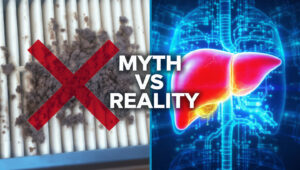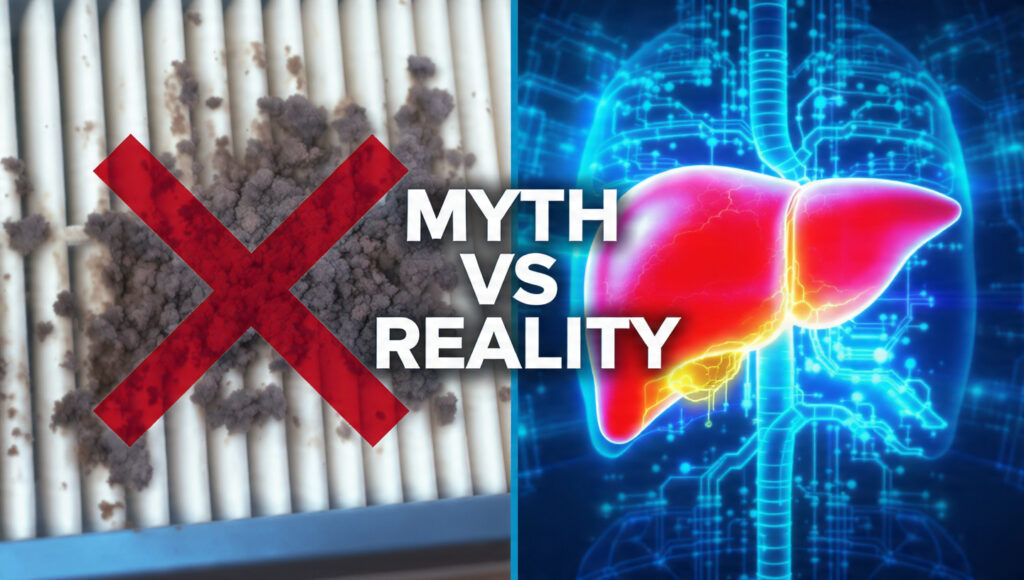
Comparison showing the difference between a dirty filter and biological science to debunk the liver detox myth
Discover the truth behind the liver detox myth. Learn why your body doesn’t need juice cleanses and how to actually support natural detoxification.
The Truth About the Liver Detox Myth
Every January, advertisements flood our social media feeds. They tell us that we need to “cleanse” our bodies after holiday eating. These ads claim that drinking expensive green juices for a week will flush out all the “toxins.” This idea is very popular. However, it is basically a marketing trick.
People know this concept as the liver detox myth. Many people believe that when they feel tired or sluggish, their liver is “clogged,” so they turn to extreme diets or liquid cleanses. But scientists and doctors agree that these products are unnecessary. In fact, some can even be harmful.
Let’s explore why your liver doesn’t need a bath and why the liver detox myth is just that—a myth.
Why the “Dirty Filter” Idea is Part of the Liver Detox Myth
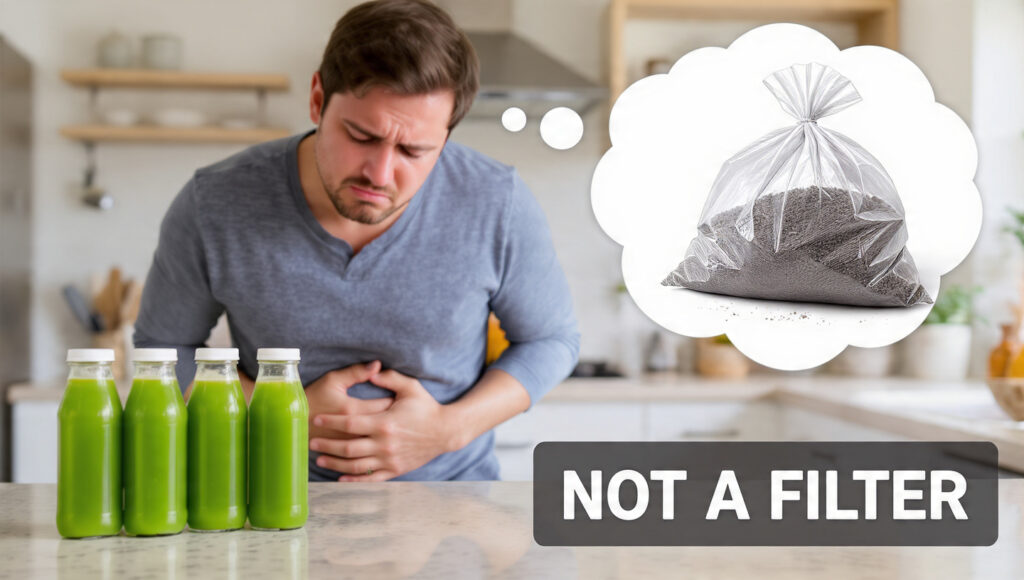
To understand the liver detox myth, we first need to look at how people imagine the liver works. Often, the liver is compared to a filter in your house, like a vacuum cleaner bag or an air conditioning filter.
The idea is that over time, “gunk” and dirt get trapped in the filter. Eventually, it gets full and needs to be cleaned out or replaced. If you believe the liver detox myth, you think your liver stores toxins in the same way.
This analogy, however, is completely wrong.
Your liver is not a dirty storage unit. It does not hold onto toxins until it is full. In reality, your liver is more like a 24-hour chemical processing plant. Its job is to take substances from your blood, break them down chemically, and get them ready to leave your body immediately. If your liver actually stored poisons like a filter, you would get very sick, very quickly.
How Your Liver Actually Works (The Real Science)
So, if it’s not a filter, what is it doing? Your liver is incredibly smart. It has a two-step process to handle everything you eat, drink, and breathe.
First, the liver takes a toxic substance and uses enzymes to burn it or break it apart. This is step one.
Second, and most importantly, the liver needs to make that broken-down substance safe to travel through your body so it can be peed or pooped out. To do this, the liver attaches a special nutrient to the toxin.
Think of it like taking out the trash. You don’t just throw loose garbage in the truck. You put it in a bag first so it can be safely moved. Your liver is the one bagging the trash.
The Problem with Juice Cleanses and the Liver Detox Myth
This is where juice cleanses fail. To perform that second step—bagging the trash—your liver needs specific nutrients. The most important nutrients for this are amino acids, which come from eating protein.
Juice cleanses are usually loaded with fruit sugar, but they have almost zero protein.
When you only drink juice, your liver can do step one (breaking things down). But, it cannot do step two (bagging the trash safely) because it is starved of protein. Consequently, you might have highly reactive, halfway-processed toxins floating around your body with nowhere to go.
This can actually create more stress on your body than before you started the cleanse. This basic biological fact is conveniently ignored by those promoting the liver detox myth. For a deeper dive into how the liver functions, respected sources like the Mayo Clinic provide excellent, scientifically accurate information.
The Dangers of Buying into the Liver Detox Myth
Besides not working, believing the liver detox myth can lead to other problems.
If you go on a strict juice fast for several days, your body still needs amino acids to run your liver. If you aren’t eating them, your body has to find them somewhere else. Unfortunately, it often takes them from your muscles. You might lose weight on a cleanse, but a lot of that weight could be precious muscle tissue.
Furthermore, fruit juices stripped of their fiber contain concentrated sugar. Drinking large amounts of sugar spikes insulin levels. Ironically, high insulin and excess sugar can contribute to fatty liver disease. In an attempt to “clean” the liver, these cleanses can sometimes harm it.
Real Ways to Support Your Liver (Forget the Liver Detox Myth)
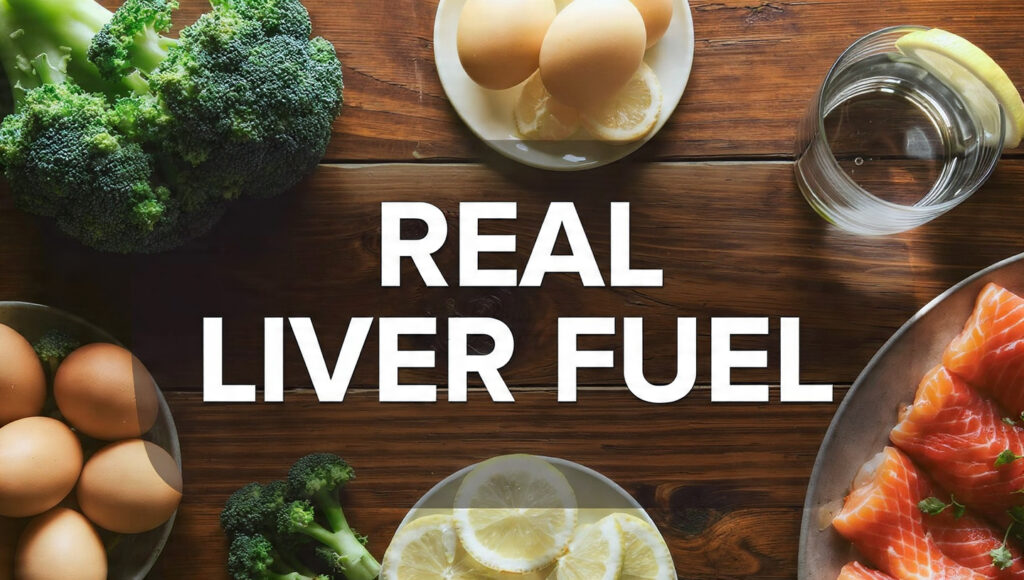
If juice cleanses don’t work, what does?
You don’t need to “detox” your liver. It is already detoxing itself right now while you read this. You just need to support it. You need to give the chemical factory the right tools to do its job.
Forget the liver detox myth and focus on these daily habits instead:
- Eat Cruciferous Vegetables: Foods like broccoli, cabbage, and Brussels sprouts contain special compounds. These compounds help your liver boost its natural cleaning enzymes.
- Prioritize Protein: As mentioned earlier, high-quality protein (eggs, fish, legumes, lean meat) is essential for taking out the biological “trash.”
- Hydrate with Water: Water is the conveyor belt that moves waste out of your system through your kidneys and gut. Green tea is also excellent for liver health. You can read more about foods that actually help your liver here.
- Reduce the Burden: The best way to help your liver is to stop giving it so much work. Reduce alcohol consumption and limit processed foods high in sugar.
Conclusion
Your body is an amazing, self-healing machine. It does not need expensive, trendy juices to function. The liver detox myth is designed to sell products, not health. By eating real food, staying hydrated, and avoiding too much junk, you provide your liver with everything it needs to keep you healthy naturally.
FAQ: Common Questions About the Liver Detox Myth
Q: If the liver detox myth is false, why do I feel better after a cleanse?
A: You likely feel better because you stopped eating processed junk food, sugar, and alcohol, and started drinking more fluids. It’s the absence of bad stuff, not the magic of the juice, that makes you feel lighter.
Q: Are there any medical tests to see if my liver needs detoxing?
A: No. Doctors can perform blood tests to see if your liver is damaged or diseased, but there is no medical test for a “clogged” liver because that is not how the organ works.
Q: Is intermittent fasting part of the liver detox myth?
A: Short periods of fasting, such as 12–16 hours overnight, can give your digestion a rest and support health. However, experts generally do not recommend multi-day starvation diets based on the liver detox myth.
Related Article
7 Causes of Non-Drinkers’ Liver Disease You Must Know
4 Common Liver Diseases in India & How to Prevent
New Research Reveals How Intermittent Fasting for Fatty Liver Works
Herbal Supplements Liver Risk: Myths, Facts, and Medical Advice
Women’s Liver Failure Symptoms That Need Urgent Care