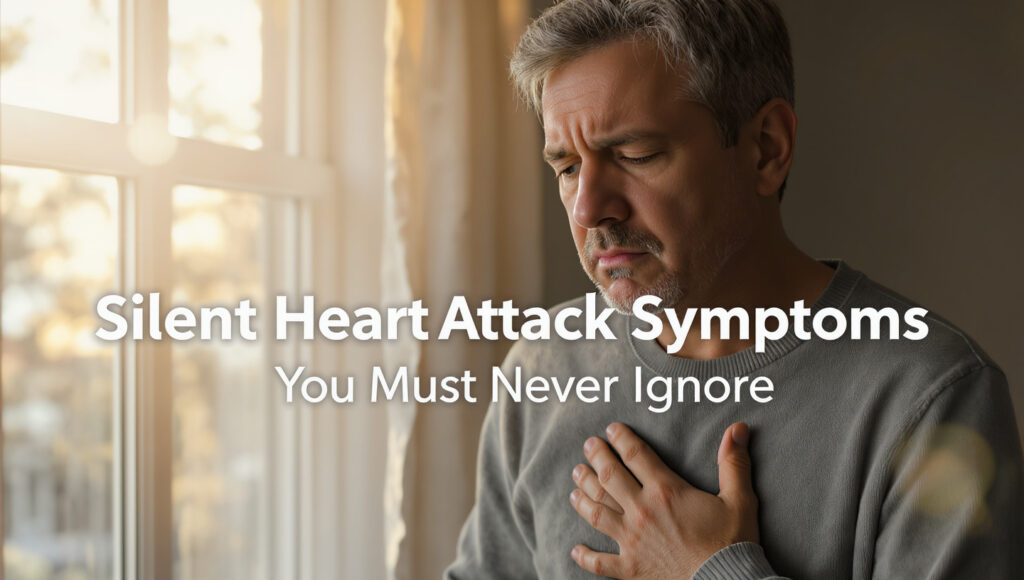
Concerned adult experiencing silent heart attack symptoms
Learn the 7 silent heart attack symptoms that often go unnoticed. Early detection saves lives—don’t ignore these warning signs.
Know the Silent Heart Attack Symptoms Now
Most people think a heart attack always comes with chest pain, sweating, and dramatic collapse—like in the movies. But that’s not always true. In fact, many heart attacks happen quietly, without the classic signs. These are called silent heart attack symptoms, and they can be easy to miss.
Because of this, people often delay getting help. And that delay can be dangerous.
In this article, we’ll walk you through 7 subtle silent heart attack symptoms you should never ignore. Even if you feel “fine,” your body might be sending quiet SOS signals.
Let’s get started—your heart will thank you.
What Is a Silent Heart Attack?
A silent heart attack is just like a regular heart attack, but without the obvious pain or drama. It happens when blood flow to part of the heart is blocked, but the symptoms are so mild or unusual that they’re mistaken for something else—like indigestion or fatigue.
According to the American Heart Association, nearly half of all heart attacks are silent. That means millions of people may have had one and not even known it!
Worse still, silent heart attacks are linked to a higher risk of future heart problems. So, recognizing silent heart attack symptoms early is super important.
Why Do Silent Heart Attacks Happen?
Sometimes, nerves in the heart aren’t as sensitive. Or, a person might have a high pain tolerance. In other cases, diabetes can dull nerve signals, making pain less noticeable.
Also, women, older adults, and people with diabetes are more likely to experience silent heart attack symptoms. That’s why everyone—especially these groups—should stay alert.
Now, let’s look at the 7 key signs you shouldn’t brush off.
1. Unusual Fatigue (A Common Silent Heart Attack Symptom)
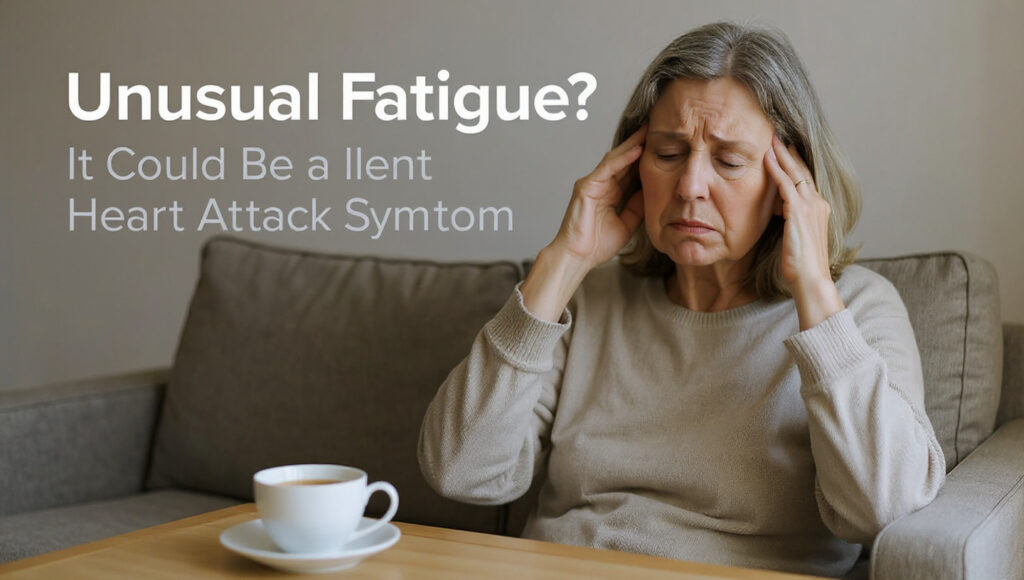
Feeling tired after a long day? Totally normal. But if you’re exhausted for no reason—even after a good night’s sleep—it could be a red flag.
This kind of fatigue often hits women harder. You might feel too weak to cook, walk upstairs, or even hold a conversation.
If unusual tiredness lasts more than a few days, don’t ignore it. It could be one of the earliest silent heart attack symptoms.
2. Mild Chest Discomfort (Not Always Pain!)
Not all chest issues feel like sharp pain. Sometimes, it’s just pressure, fullness, or a squeezing feeling that comes and goes.
You might think it’s heartburn. But if it happens during activity—or wakes you up at night—it could be your heart talking.
Remember: silent heart attack symptoms don’t always scream. Sometimes, they whisper.
3. Shortness of Breath Without Exercise :A Silent Heart Attack Symptom

Have you ever felt out of breath just walking to the bathroom or talking on the phone? If yes—and you’re not sick—it’s worth checking out.
Shortness of breath can happen even before chest discomfort. It’s often mistaken for aging or being “out of shape.”
But when it appears suddenly and without cause, it may be a silent heart attack symptom.
4. Pain in Strange Places: A Silent Heart Attack Symptom

Your heart doesn’t always send pain to your chest. Sometimes, it travels to your jaw, neck, back, shoulders, or even your stomach.
For example, you might feel a dull ache in your left arm that won’t go away. Or a weird tightness in your upper back.
These odd pains are often ignored. Yet, they can be classic silent heart attack symptoms, especially in women.
5. Cold Sweats and Dizziness: A Silent Heart Attack Symptoms
Breaking into a cold sweat while sitting still? Feeling lightheaded for no reason? These aren’t just “stress signs.”
When your heart struggles, your body can react with sudden sweating, nausea, or dizziness.
If these happen along with other mild symptoms, don’t wait. Call a doctor. These could be silent heart attack symptoms in disguise.
6. Indigestion That Won’t Go Away: A Silent Heart Attack Symptoms
Heartburn after spicy food? Normal. But if you feel full, bloated, or nauseous without eating anything unusual—and it lasts for hours—it might not be your stomach.
The heart and stomach are close, so heart trouble can feel like indigestion.
This is a very common but overlooked silent heart attack symptom, especially in older adults.
7. Sleep Problems and Anxiety: A Silent Heart Attack Symptoms
Trouble falling asleep? Waking up with a racing heart? Feeling unusually anxious? These emotional and sleep changes can also signal heart trouble.
Stress is often blamed—but if these feelings are new and unexplained, your heart might be the real cause.
Yes, even anxiety can be one of the sneaky, silent heart attack symptoms.
What Should You Do If You Notice These Signs?

If you or someone you know has any of these silent heart attack symptoms, don’t wait. Call your doctor or go to the nearest hospital.
Time matters. The sooner you get help, the better your chances of recovery.
Also, regular check-ups are key—especially if you have risk factors like high blood pressure, high cholesterol, smoking, obesity, or a family history of heart disease.
For more info on heart health, check out trusted sources like the American Heart Association or the CDC’s Heart Disease page.
Prevention Is Possible
The good news? Many silent heart attack symptoms can be prevented.
Eat more fruits, veggies, and whole grains. Move your body every day—even a 30-minute walk helps. Quit smoking. Manage stress. And keep your blood pressure and sugar in check.
Small changes today can protect your heart tomorrow.
Final Thoughts
Heart attacks don’t always look like emergencies. Sometimes, they hide in plain sight.
By learning these 7 silent heart attack symptoms, you’re giving yourself—and your loved ones—a better chance at a healthy life.
Don’t ignore the whispers. Listen to your body. And when in doubt, get it checked out.
Your heart is working hard for you. It’s time to return the favor.
FAQ: Silent Heart Attack Symptoms
Q1: Can a silent heart attack happen to young people?
Yes, though it’s more common in older adults, young people with risk factors (like smoking, obesity, or family history) can also have silent heart attacks.
Q2: How is a silent heart attack diagnosed?
Often, it’s found later through an ECG (electrocardiogram) or heart scan during a routine check-up. That’s why regular doctor visits matter.
Q3: Are silent heart attacks less dangerous?
No. They can be just as serious as typical heart attacks. In fact, because they’re missed, they may lead to more heart damage over time.
Q4: What’s the difference between a heart attack and angina?
Angina is chest pain caused by reduced blood flow, but it doesn’t cause permanent heart damage. A heart attack does. However, angina can be a warning sign of a future heart attack.
Q5: Where can I learn more about heart health?
Visit the American Heart Association or talk to your doctor. Knowledge is your best protection!
Disclaimer: This article is for informational purposes only and is not a substitute for professional medical advice.
Related Articles:
5-Minute Breathing Habit for Stronger Heart and Brain
10 signs of heart disease you ignore — doctor explains
6-6-6 Walking Trend: Simple Steps to a Healthier Heart
Decline in Physical Activity and Heart Attack Risk: What You Need to Know





1 thought on “Know the Silent Heart Attack Symptoms Now”