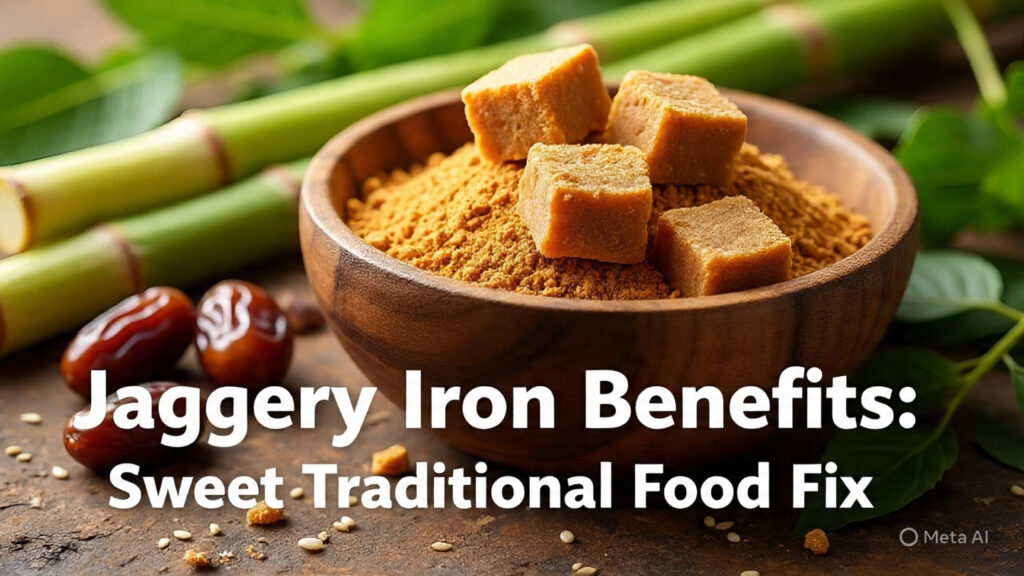
jaggery iron benefits traditional food in a wooden bowl with sugarcane and sesame seeds
Discover jaggery iron benefits in this traditional food. Boost energy & health naturally with easy, tasty ways to use gur daily.
Jaggery Iron Benefits: Sweet Traditional Food Fix
Have you ever wondered why your grandmother always added a small piece of jaggery to your morning meal? Well, it wasn’t just for taste! Jaggery—also called gur in many Indian homes—is more than a sweetener. In fact, it’s a powerhouse of nutrients, especially iron. And the best part? It’s a traditional food that’s been used for centuries across India and other parts of Asia.
In this blog, we’ll explore the jaggery iron benefits and why this humble sweet can be your go-to natural health booster. Plus, we’ll share simple ways to include it in your everyday diet—without any fancy recipes!
What Is Jaggery, and Why Is It Special?
Jaggery is an unrefined sugar made from sugarcane juice or palm sap. Unlike white sugar, it’s not heavily processed. Because of this, it keeps many natural minerals intact—especially iron.
Traditionally, jaggery has been used in Indian kitchens not just for sweetness but also for its warming properties and health benefits. Even today, it’s a common ingredient in festivals, rituals, and home remedies.
And guess what? Many of these age-old uses are now backed by science—especially when it comes to jaggery iron benefits.
Jaggery Iron Benefits: Why Your Body Needs It
Iron is a key mineral your body needs to make hemoglobin—the protein in red blood cells that carries oxygen. Without enough iron, you may feel tired, weak, or dizzy. This condition is called anemia.
Now, here’s the good news: jaggery is a natural source of iron. In fact, 100 grams of jaggery contains about 11 mg of iron—almost 60% of your daily need!
So, when you eat jaggery regularly, jaggery iron benefits can include:
- Better energy levels
- Improved blood circulation
- Reduced risk of anemia
- Healthier skin and hair
Moreover, because jaggery also contains small amounts of folate and vitamin C, your body can absorb iron more easily. That’s a big plus!
Jaggery as a Traditional Food with Modern Benefits

Jaggery isn’t just healthy—it’s deeply rooted in Indian culture. From gur wale chawal (rice with jaggery) in winters to til-gur (sesame-jaggery sweets) during Makar Sankranti, this traditional food has always played a role in seasonal wellness.
What’s more, jaggery iron benefits are often enhanced when paired with other traditional ingredients. For example:
- Mixing jaggery with ginger helps digestion and boosts iron absorption.
- Eating it with sesame seeds (like in til-gur laddoos) gives you double the iron!
These combinations weren’t created by chance—they were developed over generations for real health reasons.
Easy Ways to Add Jaggery to Your Daily Diet

You don’t need to cook elaborate dishes to enjoy jaggery’s iron benefits. Here are some simple ideas:
- Morning Kickstart: Replace sugar in your tea or milk with a small piece of jaggery.
- Healthy Snack: Enjoy a small gur ki barfi or chikki (jaggery-nut brittle) in the afternoon.
- Post-Meal Digestive: Chew a tiny piece of jaggery after meals—it aids digestion and adds iron.
- Smoothie Boost: Blend jaggery into your fruit smoothies for natural sweetness and nutrients.
Just remember: a little goes a long way. One or two teaspoons a day is enough to enjoy the jaggery iron benefits without extra calories.
Is Jaggery Better Than White Sugar?

Many people ask this—and the answer is yes, in several ways. While both jaggery and white sugar come from sugarcane, jaggery keeps its natural vitamins and minerals. White sugar, on the other hand, is stripped of almost all nutrients during refining.
Also, jaggery has a lower glycemic index than white sugar. That means it doesn’t cause sudden spikes in blood sugar. Of course, it should still be eaten in moderation—especially if you have diabetes. But for most people, choosing jaggery over refined sugar is a smarter, tastier option.
For more on natural sweeteners, check out this guide from Healthline on jaggery vs. sugar .
Who Should Be Extra Careful?
While jaggery iron benefits are great for most people, a few should take caution:
- Diabetics: Jaggery still raises blood sugar, so consult your doctor before adding it regularly.
- Those with iron overload: If you have conditions like hemochromatosis, too much iron can be harmful.
Also, always buy pure, unadulterated jaggery. Some low-quality brands mix it with chemicals or artificial colors. Look for organic or trusted local brands. The Food Safety and Standards Authority of India (FSSAI) offers tips on identifying safe traditional foods.
Jaggery Iron Benefits in Women’s Health
Women—especially during periods or pregnancy—need more iron. Fatigue, pale skin, and mood swings can all be signs of low iron.
Here’s where jaggery iron benefits really shine. Many Indian moms give their daughters warm milk with jaggery during their periods. Why? Because it helps replenish lost iron and eases cramps naturally.
During pregnancy, small amounts of jaggery can support healthy hemoglobin levels—just be sure to talk to your doctor first.
Final Thoughts: A Sweet Step Toward Better Health

Jaggery is more than just a traditional food—it’s a simple, natural way to boost your iron intake. With its rich taste and health perks, it’s no wonder this sweetener has stood the test of time.
So next time you reach for sugar, think about swapping it with jaggery. Your body—and your taste buds—will thank you!
For more on traditional Indian superfoods, visit India Times’ wellness section .
FAQ: Jaggery Iron Benefits & Traditional Food
Q1: How much jaggery should I eat daily for iron benefits?
A: Just 1–2 teaspoons (10–20 grams) per day is enough to get the jaggery iron benefits without overdoing sugar.
Q2: Can jaggery cure anemia?
A: Jaggery can help prevent or manage mild iron deficiency, but it’s not a cure for clinical anemia. Always consult a doctor for proper treatment.
Q3: Is jaggery safe for kids?
A: Yes! In small amounts, jaggery is a healthier sweet option for children and supports their growing iron needs.
Q4: Does jaggery lose iron when cooked?
A: A little, but not much. Most jaggery iron benefits remain intact even when used in cooking or baking.
Q5: Can I eat jaggery at night?
A: Yes, but in small quantities. Some people find it energizing, so avoid large amounts close to bedtime.
By choosing jaggery—a beloved traditional food—you’re not just enjoying sweetness. You’re also tapping into generations of wisdom about natural health. So go ahead, savor that piece of gur, and let the jaggery iron benefits work their magic!
Related Articles:
Best Iron-Rich Indian Foods for Energy & Health
Spinach Iron Content: Boost Your Indian Diet Now
Lentils for Iron? How Vegetarian India Stays Strong
Best Iron Rich Foods in Pregnancy to Eat Daily
Millets High Iron Indian Grains for Better Health