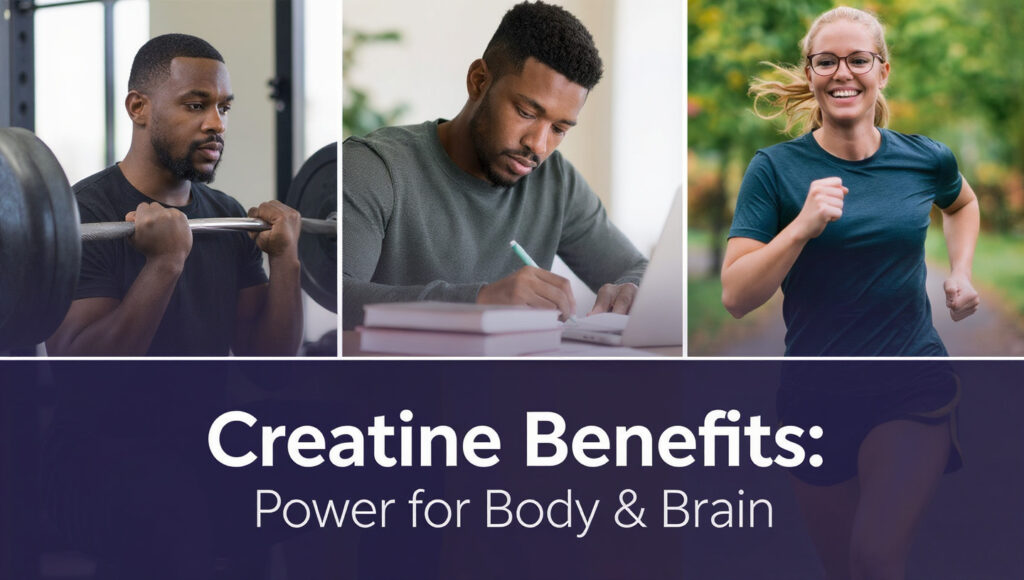
creatine benefits shown through fitness, studying, and active lifestyle
Discover surprising creatine benefits for muscles, memory, and mood. Learn how this supplement helps both body and mind beyond the gym.
Hidden Creatine Benefits for Mind & Muscle
When you hear the word creatine, what comes to mind? Probably big muscles, heavy weights, and sweaty gym sessions, right? But guess what—creatine benefits go way beyond bulking up. In fact, this simple compound can help your brain just as much as your biceps!
And the best part? You don’t need to be a bodybuilder to enjoy these perks. Whether you’re a student, an office worker, or just someone who wants to feel sharper and stronger, creatine might be worth your attention.
Let’s break it down in plain, easy English—no science jargon, just real talk.
What Exactly Is Creatine?
Creatine is a natural substance found in your body, mostly in your muscles and brain. It’s also present in foods like red meat and fish. But many people take it as a supplement because it’s hard to get enough from a diet alone.
Here’s how it works: your cells use something called ATP for energy. Think of ATP as tiny batteries that power everything you do—from blinking to sprinting. Creatine helps recharge those batteries faster. So, when you need a quick burst of energy (like during a sprint or a tough math problem!), creatine has your back.
Creatine Benefits for Your Muscles
Most people know about this part. Creatine benefits your muscles in a few key ways:
- More strength: You can lift heavier weights or do more reps.
- Faster recovery: Your muscles bounce back quicker after a workout.
- Better endurance: Short bursts of high-intensity activity feel easier.
In fact, creatine is one of the most researched supplements in sports science. According to the International Society of Sports Nutrition, it’s safe, effective, and backed by decades of studies.
But here’s the twist—your brain runs on the same energy system! So, if creatine helps muscles recharge, why not your mind too?
Creatine Benefits for Your Brain

Yes, really! Your brain uses a lot of energy—about 20% of your body’s total! And just like muscles, brain cells need ATP to fire quickly and clearly.
Studies show that creatine benefits brain function in several ways:
- Sharper memory: Especially during stressful or tiring situations.
- Better focus: Helps you stay on task longer.
- Mood support: Some research links creatine to a lower risk of depression.
For example, a study published in the journal Nutrients found that creatine supplementation improved cognitive performance in sleep-deprived people. That means if you’re pulling an all-nighter for exams, creatine might help you think clearly.
Even more interesting? Vegetarians often see bigger brain benefits from creatine because their diets naturally contain less of it.
Who Can Benefit from Creatine?

You might think only athletes need creatine. But that’s not true!
- Students: Better focus and memory during exams.
- Older adults: Helps protect muscles and the brain as we age.
- Busy professionals: More mental stamina for long workdays.
- Fitness beginners: Easier workouts and faster progress.
Creatine isn’t a magic pill—but it’s like giving your body and brain a little extra fuel when they need it most.
Is Creatine Safe?
This is a common worry. Good news: Creatine is one of the safest supplements out there.
It’s been studied for over 30 years. No serious side effects have been found when taken at normal doses (usually 3–5 grams per day).
Some people say creatine causes bloating or cramps. But these are rare—and often happen only if you take too much at once or don’t drink enough water.
Also, your body makes creatine naturally. So, you’re not putting something “foreign” into your system. You’re just topping up what’s already there.
According to Harvard Health, creatine is safe for healthy people when used properly. Still, if you have kidney issues, talk to your doctor first.
How to Use Creatine the Right Way
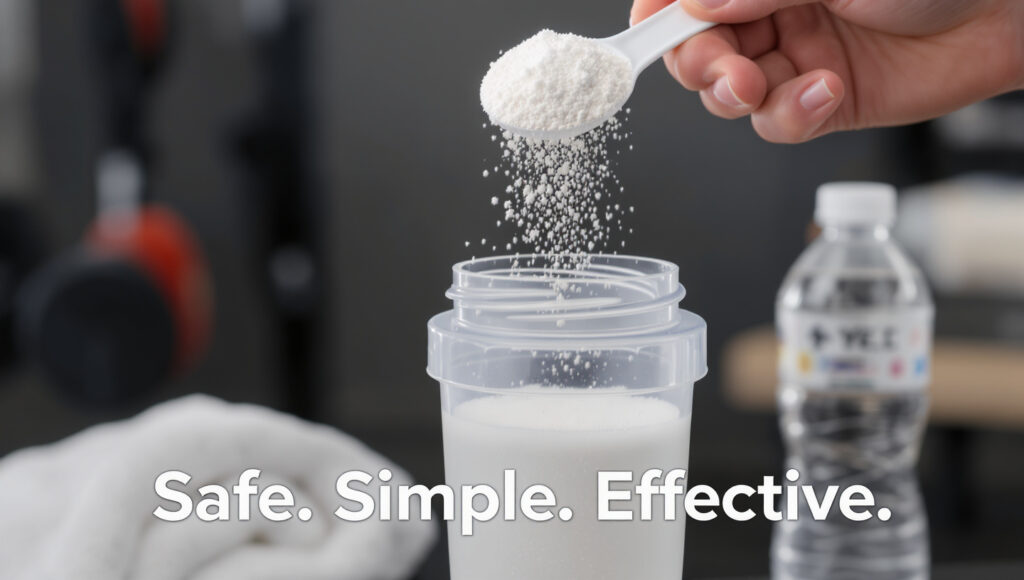
Want to try it? Here’s how to get the most from creatine benefits:
Start with a Loading Phase (Optional)
Some people take 20 grams a day (split into 4 doses) for 5–7 days. This fills your muscles faster. But it’s not required.
Or Just Take 3–5 Grams Daily
This simple method works just as well over time. Consistency matters more than speed.
Take It With Food or a Carbohydrate
This helps your body absorb it better. A banana or a slice of toast works fine!
Drink Plenty of Water
Creatine pulls water into your muscles, so stay hydrated.
Remember: results don’t show up overnight. Give it 2–4 weeks to notice changes in energy, strength, or focus.
Common Myths About Creatine
Let’s clear up a few misunderstandings:
- Myth: Creatine is a steroid.
Truth: Nope! It’s totally natural and not related to steroids. - Myth: It damages your kidneys.
Truth: No evidence of harm in healthy people. - Myth: Only men should take it.
Truth: Women benefit just as much, especially for brain health and bone strength.
Final Thoughts
Creatine benefits aren’t just about looking strong—they’re about being strong, inside and out. From lifting weights to acing a test, this little supplement supports your whole system.
And the science backs it up. Safe, simple, and surprisingly powerful.
So, if you’ve been curious about creatine, now’s a great time to learn more. Talk to your doctor, start small, and see how your body—and mind—respond.
FAQ: Your Creatine Benefits Questions Answered
Q: How long does it take to feel the creatine benefits?
A: Most people notice changes in 2–4 weeks. Muscle gains may show faster than brain effects.
Q: Can I take creatine without working out?
A: Yes! You’ll still get brain and energy benefits, even if you’re not hitting the gym.
Q: Should I take creatine every day?
A: Yes. Daily use keeps your levels steady for the best results.
Q: Is creatine good for teenagers?
A: Generally, yes—but only with a doctor’s OK and proper guidance.
Q: What’s the best type of creatine?
A: Creatine monohydrate is the most studied, cheapest, and most effective form.
Always consult a healthcare provider before starting any new supplement, especially if you have health conditions or take medications.
Related Articles
Dual-task exercise for memory: A simple way to protect brain health
Easy Yoga Poses for Good Lung Health – Breathe Better
Cardio vs Strength Training: How to Manage Weight Effectively
The Best Recipe for Longevity: Diet, Exercise, Immunity