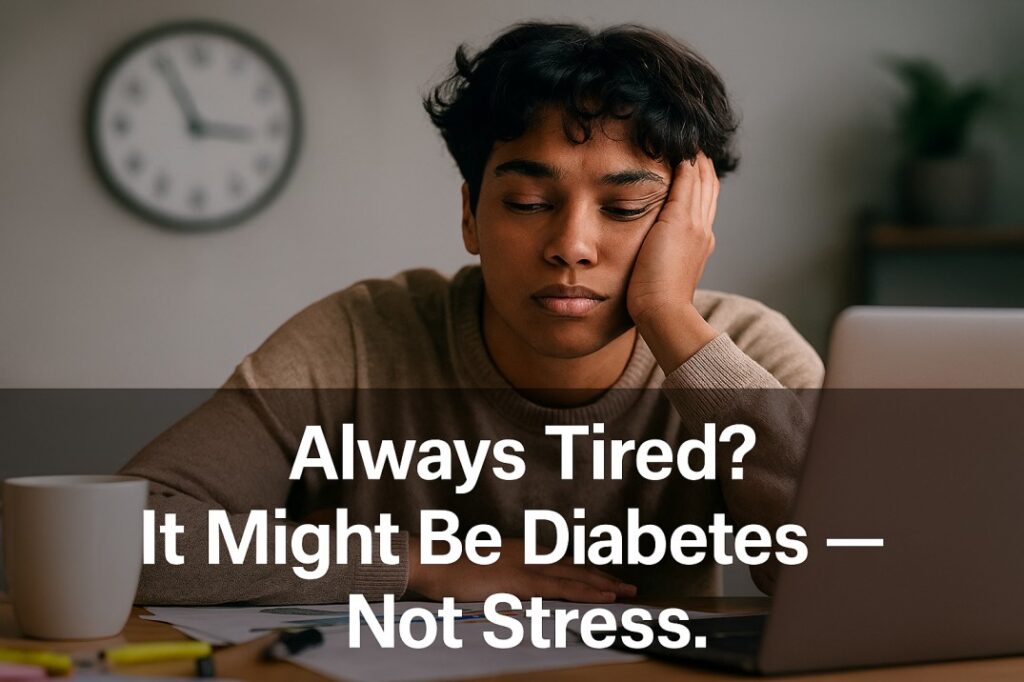
fatigue and diabetes in young adults – young person exhausted at work, not just stress
Fatigue and diabetes in young adults? Don’t shrug it off as burnout. Learn the silent signs, when to test, and how to take back your energy — starting today.
Fatigue and Diabetes in Young Adults — Test Now, Not Later
Hey there, friend 👋
If you’re in your 20s and always feel wiped out — even after a full night’s sleep — you’re not alone. Maybe you blame your job, your phone, or that third cup of coffee you needed just to open your eyes. But what if it’s not stress? What if it’s something more serious?
Fatigue and diabetes in young adults are quietly connected. And yes — diabetes isn’t just for older folks anymore.
Let’s break this down in simple words. No medical jargon. No scary stats (well, maybe one or two). Just straight talk so you can take care of yourself — because you deserve to feel energetic and alive!
Why Fatigue and Diabetes in Young Adults Often Get Missed

It’s easy to brush off tiredness. “I’m just busy,” you say. “Everyone’s tired these days.”
But when fatigue and diabetes in young adults team up, they send signals your body can’t ignore forever.
Diabetes (especially Type 2) sneaks in slowly. It doesn’t knock on your door screaming. It tiptoes. And one of its favorite disguises? Exhaustion.
You might think:
- “I’ll feel better after the weekend.”
- “Maybe I need more protein.”
- “I’m just getting old.” (Spoiler: You’re not old at 25.)
But if your energy doesn’t bounce back — even with rest, good food, or less screen time — it’s time to dig deeper.
How Fatigue and Diabetes in Young Adults Are Linked
Here’s the science — made super simple.
When you eat, your body turns food into sugar (glucose). That sugar needs to get into your cells to give you energy. Insulin is the key that unlocks the door.
But if you have early diabetes, your body either:
- Doesn’t make enough insulin, or
- Your cells stop listening to insulin (this is called insulin resistance).
So sugar piles up in your blood… and your cells starve. No fuel = no energy = constant fatigue.
Fatigue and diabetes in young adults aren’t just “feeling sleepy.” It’s that heavy, can’t-get-out-of-bed, brain-fog kind of tired — even after 8 hours of sleep.
Signs That It’s More Than Just Stress

Stress can drain you, sure. But if you notice these along with your tiredness, don’t ignore them:
You might notice you’re peeing a lot — especially at night — and no matter how much water you drink, you still feel thirsty. On top of that, you’re hungrier than usual, yet you’ve started losing weight without even trying. Even worse, your cuts or bruises take forever to heal, and sometimes, out of nowhere, your vision gets blurry — like your eyes forgot how to focus.
These are red flags. And when mixed with fatigue and diabetes in young adults, they’re like your body waving a giant “HELP!” sign.
Who’s at Risk? (It Might Be You!)
You don’t have to be overweight or eat junk food every day to get diabetes. These days, it’s showing up in all kinds of young adults.
You might be at higher risk if you sit most of the day (hello, desk job!) and rarely get up to move or exercise. Add to that a habit of sipping sugary drinks or snacking on sweets regularly, and your risk climbs even more — especially if diabetes runs in your family. Also, if you’re a mom who had gestational diabetes during pregnancy, or if you have PCOS (which is super common in women in their 20s), your body may already be working harder than it should to manage blood sugar.
Even if you’re thin and “healthy,” fatigue and diabetes in young adults can still happen. Your body doesn’t care about your Instagram aesthetic — it cares about how your cells are working.
What You Can Do Right Now

Don’t panic. This isn’t a doom scroll. It’s a wake-up call — literally.
1. Get a Simple Blood Test
Ask your doctor for:
- Fasting blood sugar test
- HbA1c test (shows your 3-month sugar average)
These tests are quick, cheap, and sometimes even free. Many clinics offer walk-in testing. No excuses!
👉 American Diabetes Association – Know Your Risk
2. Track Your Energy & Habits
Keep a simple journal for 1 week:
- When do you feel most tired?
- What did you eat that day?
- Did you move your body?
- How much water did you drink?
Patterns will show up. And patterns help doctors help you.
3. Small Changes = Big Results
You don’t need to overhaul your life. Start small:
- Swap soda for sparkling water
- Walk 15 minutes after meals
- Sleep 30 minutes earlier
- Eat protein with every meal (eggs, nuts, beans, chicken)
These tiny tweaks can lower your blood sugar — and boost your energy.
Real Talk: It’s Not “Just Stress”
We get it. Life in your 20s is wild. Jobs, relationships, rent, TikTok, side hustles… stress is real.
But fatigue and diabetes in young adults shouldn’t be brushed off as “just burnout.”
One study found that 1 in 5 adults under 30 with Type 2 diabetes didn’t know they had it — until they ended up in the ER. 😳
👉 CDC – Diabetes in Young Adults
That’s why early action matters. Diabetes caught early can often be reversed — or at least managed — without meds.
When to See a Doctor (Spoiler: Sooner = Better)
If you’ve had fatigue for more than 2–3 weeks — and rest, water, and better sleep don’t fix it — book that doctor’s appointment.
Say this to your doctor:
“I’m exhausted all the time, even after sleeping. I’m worried it might be related to blood sugar or diabetes. Can we test?”
Doctors hear this all the time. You won’t sound silly. You’ll sound smart.
And if the test comes back normal? Great! Now you can dig into other causes (thyroid? iron? sleep apnea?).
But if it’s high? You caught it early. That’s a win.
Don’t Let Shame or Fear Stop You
Some folks think:
“If I have diabetes, I failed.” “People will judge me.” “It’s too late to fix it.”
None of that is true.
Fatigue and diabetes in young adults are medical issues — not moral failures. Millions of young people are going through this. You’re not broken. You’re human.
And guess what? Your body is amazing at healing — if you give it the right tools.
Final Thoughts: Listen to Your Body
Your 20s should be full of energy, adventure, and late-night laughs — not 3 p.m. naps and brain fog.
If fatigue and diabetes in young adults is something you’re experiencing, don’t wait. Don’t guess. Don’t Google-diagnose endlessly.
Test. Talk. Take action.
Your future self will high-five you for it.
👉 Mayo Clinic – Type 2 Diabetes Symptoms

FAQ: Fatigue and Diabetes in Young Adults
Q1: Can you have diabetes in your 20s and not know it?
Yes! Many young adults have early diabetes with no obvious symptoms — except fatigue. That’s why testing is key.
Q2: Does being tired always mean diabetes?
No. Fatigue can come from many things — anemia, thyroid issues, poor sleep, or depression. But when fatigue and diabetes in young adults appear together with other signs (like thirst or frequent peeing), it’s worth checking.
Q3: Can I reverse early diabetes?
Often, yes! With diet changes, movement, and weight management (if needed), many young adults bring their blood sugar back to normal. The earlier you start, the better.
Q4: What should I eat if I’m worried about diabetes?
Focus on whole foods: veggies, lean proteins, healthy fats, and fiber-rich carbs (like oats, beans, sweet potatoes). Avoid sugary drinks and ultra-processed snacks.
Q5: How fast can fatigue improve after treatment?
Some people feel better in days or weeks after balancing their blood sugar. Others take a few months. Be patient — your body is healing!
You’ve got this. 💪
Don’t let fatigue steal your 20s. If something feels off, speak up. Get tested. Take small steps. Your energy — and your health — are worth it.
And hey — if this article helped you, share it with a friend who’s always saying, “I’m so tired.” You might just save their life.
Stay curious. Stay healthy. And never ignore your body’s whispers — because they turn into screams.
— Your blogger friend who’s been there too 😊
Related Articles:
Tired all the time? Early diabetes symptoms in your 20s
Early Signs of Diabetes in Women — Spot Them Now
Type 2 Diabetes in 20s: Why It’s Rising & How to Stop It
Frequent urination and thirst, diabetes: check your sugar now
Blurred Vision Diabetes Young Adults? Get Checked Now
Unexplained Weight Loss Diabetes 20s? Act Fast Now
Slow Healing Wounds Diabetes Young? Check Sugar Now






Your point of view caught my eye and was very interesting. Thanks. I have a question for you. https://accounts.binance.info/en-NG/register-person?ref=YY80CKRN