
Healthy breakfast bowl with text promoting morning calories for blood sugar control.
Eating more morning calories helps stabilize blood sugar levels, reduce cravings, and support overall metabolic health throughout the day.
How Morning Calories Improve Blood Sugar Control
Have you ever felt shaky or tired around mid-morning? Or maybe you crash hard after lunch? If so, your blood sugar might be to blame. But here’s some good news: morning calories could be the simple fix you’ve been missing.
In this blog, we’ll explore why eating more calories early in the day supports better blood sugar control. We’ll break it down in easy terms—no confusing science jargon. And yes, even a 10th-grade student can understand it!
Let’s get started.
What Is Blood Sugar—and Why Should You Care?
Blood sugar (or blood glucose) is the main sugar found in your blood. It comes from the food you eat and gives your body energy. But too much or too little can cause problems.
When your blood sugar spikes and crashes, you feel tired, hungry, or moody. Over time, poor blood sugar control can lead to serious health issues like type 2 diabetes. That’s why keeping it stable matters—a lot.
Luckily, when you eat is just as important as what you eat. And research shows that morning calories play a big role here.
The Power of Morning Calories for Blood Sugar Balance

Your body works like a well-timed clock. In the morning, your metabolism is fast, and your cells are more sensitive to insulin—the hormone that helps control blood sugar.
Because of this, the calories you eat in the morning are used more efficiently. They’re less likely to be stored as fat and more likely to fuel your day.
On the other hand, eating heavy meals at night—when your metabolism slows down—can lead to higher blood sugar levels overnight and into the next day.
So, front-loading your calories in the morning isn’t just smart—it’s science-backed.
Fun fact: A study published in Diabetes Care found that people who ate a big breakfast had better blood sugar control than those who ate a big dinner—even if total calories were the same!
What Happens When You Skip Breakfast?
Many people skip breakfast to “save calories.” But that often backfires.
When you skip the morning meal, your body stays in fasting mode longer. Then, when you finally eat, your blood sugar can spike sharply. This rollercoaster makes cravings worse and energy levels unstable.
Moreover, skipping breakfast may lead to overeating later, especially high-sugar, high-fat snacks. These choices cause even bigger blood sugar swings.
In short, skipping breakfast = fewer morning calories = poorer blood sugar control.
How Morning Calories Help Insulin Work Better
Insulin sensitivity is highest in the morning. That means your body needs less insulin to manage the same amount of food compared to the evening.
When you eat more morning calories, your body handles glucose smoothly. Less stress is put on your pancreas (the organ that makes insulin). Over time, this lowers your risk of insulin resistance—a key step toward type 2 diabetes.
Plus, stable morning blood sugar helps keep your appetite hormones in check. You’ll feel full longer and make better food choices later.
Real-Life Example: Big Breakfast vs. Big Dinner
Imagine two people eating the same 1,800 calories per day.
- Person A eats 700 calories for breakfast, 600 for lunch, and 500 for dinner.
- Person B eats 300 for breakfast, 500 for lunch, and 1,000 for dinner.
Who has better blood sugar control? Person A.
Studies (like this one from Tel Aviv University) show that the “big breakfast” group had lower glucose spikes, better insulin response, and even lost more weight.
So, it’s not about eating more—it’s about eating when your body is most ready.
Read Article: Front-Loading Calories for Better Metabolism and Energy
Simple Ways to Add Healthy Morning Calories
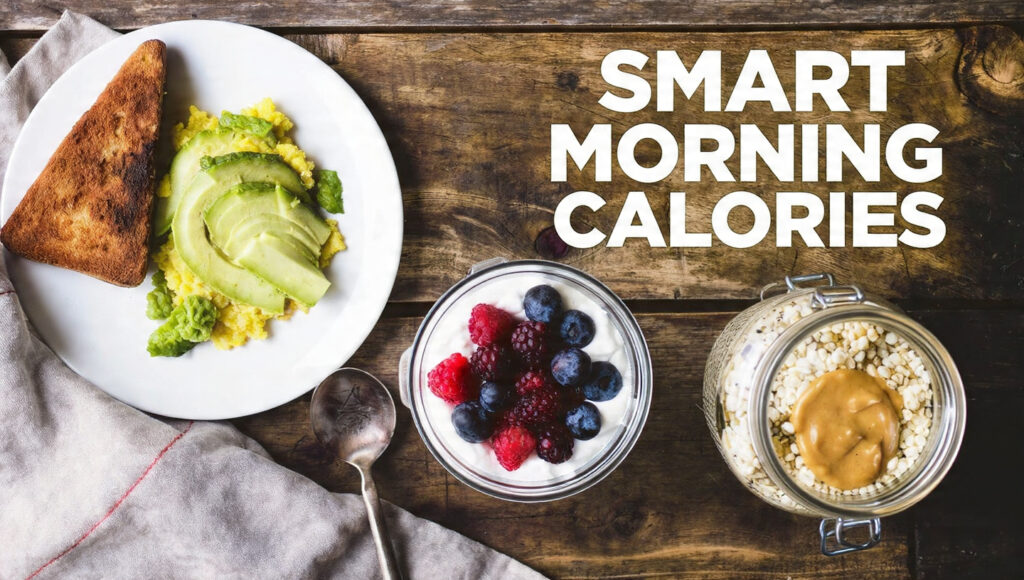
You don’t need a fancy meal to get the benefits of morning calories. Just focus on balance:
- Protein: Eggs, Greek yogurt, cottage cheese, or tofu.
- Fiber: Oats, whole-grain toast, berries, or chia seeds.
- Healthy fats: Avocado, nuts, or nut butter.
For example:
Two boiled eggs + a slice of whole-grain toast + half an avocado = a powerful, blood-sugar-friendly breakfast.
Or try:
Overnight oats with berries, chia seeds, and a spoon of almond butter.
These meals give you steady energy without sugar crashes.
And remember: sugary cereals or pastries don’t count. They spike blood sugar fast—and the crash comes quickly.
What If You’re Not Hungry in the Morning?
Some people say, “I’m just not a breakfast person.” That’s okay! But your body still needs fuel.
Start small. Try a smoothie with protein powder, banana, and spinach. Or a handful of nuts with a piece of fruit.
Over a few days, your hunger cues may adjust. Soon, you’ll naturally want a full breakfast.
Also, avoid late-night snacking. Going to bed on a full stomach can reduce morning hunger. Try to finish dinner 3 hours before bed.
This habit makes room for morning calories—and better blood sugar control.
Morning Calories vs. Intermittent Fasting
Intermittent fasting (IF) is popular. Many people skip breakfast and eat only in an 8-hour window (like noon to 8 p.m.).
But IF isn’t ideal for everyone—especially those with blood sugar issues.
When you skip morning calories, your body may release stress hormones like cortisol. This can actually raise blood sugar—even if you haven’t eaten!
If you love IF, try a modified version: eat your first meal by 9 or 10 a.m. That way, you still get the benefits of morning calories without breaking your fasting routine too early.
Always listen to your body. And if you have diabetes or prediabetes, talk to your doctor before starting any fasting plan.
Read Article: New Research Reveals How Intermittent Fasting for Fatty Liver Works
The Bottom Line: Morning Calories = Stable Energy
Eating more morning calories isn’t a magic trick—it’s a smart habit. It helps your body use food better, keeps your blood sugar steady, and reduces cravings.
You’ll feel more focused, less moody, and more in control of your appetite.
And the best part? You don’t need to count every calorie. Just aim to make breakfast your biggest, most balanced meal.
Expert Tips to Maximize Morning Calories
- Eat within 1–2 hours of waking up.
- Include protein + fiber + healthy fat in every breakfast.
- Avoid sugary drinks like juice or sweetened coffee.
- Stay hydrated—sometimes thirst feels like hunger.
- Plan ahead. Prep breakfast the night before to save time.
For more science-backed tips on blood sugar control, check out resources from the American Diabetes Association.
You can also read a detailed review on meal timing and metabolism from Harvard Health.
Final Thoughts
Your morning meal is more than just a habit—it’s a tool. When used right, morning calories can help you feel better, eat smarter, and protect your long-term health.
So tomorrow, give your breakfast a little more love. Your blood sugar—and your energy levels—will thank you.
FAQ: Morning Calories and Blood Sugar

Q1: Can I eat whatever I want in the morning as long as it’s high in calories?
No. Quality matters! Choose whole, unprocessed foods with protein, fiber, and healthy fats. A sugary donut has calories—but it’ll spike your blood sugar fast.
Q2: How many morning calories should I eat?
It depends on your total daily needs. But a good rule: make breakfast 30–40% of your daily calories. For a 2,000-calorie diet, that’s 600–800 calories at breakfast.
Q3: Will eating more in the morning make me gain weight?
Actually, the opposite is often true! Studies show people who eat a big breakfast tend to lose more weight and keep it off—because they’re less hungry later.
Q4: What if I work night shifts?
Your “morning” is when you wake up—so eat your biggest meal then. The key is aligning morning calories with your natural wake-up time, not the clock.
Q5: Can kids benefit from morning calories too?
Absolutely! Stable blood sugar helps kids focus in school, avoid mood swings, and stay full until lunch. A balanced breakfast is a must for growing bodies.
Remember: Small changes create big results. Start with one extra egg or a spoon of nuts tomorrow—and take a step toward better blood sugar control with every bite of your morning calories.