
Healthy breakfast at sunrise with clock showing 7 a.m.
Discover how meal timing shapes your circadian rhythm and boosts metabolic health—with simple, science-backed tips for better energy and sleep.
How Meal Timing Affects Your Body Clock and Health
Have you ever felt tired after lunch? Or maybe you’ve stayed up late and grabbed a snack at midnight—only to feel sluggish the next day? These aren’t just random feelings. They’re clues. Meal timing plays a big role in how your body works, especially your internal body clock and metabolism.
In this blog, we’ll break down how meal timing connects to your circadian rhythm and why it matters for your health. And don’t worry—we’ll keep things simple and easy to understand!
What Is Circadian Rhythm?
First, let’s talk about your body’s internal clock. It’s called the circadian rhythm. This 24-hour cycle runs in the background of your brain and tells your body when to sleep, wake up, eat, and even digest food.
Your circadian rhythm is mostly controlled by light. But guess what? Meal timing also influences it.
For example, if you eat dinner very late every night, your body might get confused. It thinks it’s still daytime—even if it’s 11 p.m.! Over time, this can mess with your sleep and digestion.
Why Meal Timing Matters for Your Metabolism

Now, let’s talk about metabolism. In simple words, metabolism is how your body turns food into energy.
Your metabolism doesn’t work the same all day long. It’s strongest during daylight hours. That means your body burns calories more efficiently in the morning and afternoon.
But when you eat late at night, your metabolism slows down. So, the same food might turn into fat instead of fuel.
Studies show that poor meal timing is linked to weight gain, high blood sugar, and even heart disease. On the flip side, eating meals at consistent times can boost your energy, help you sleep better, and support healthy blood sugar levels.
How Meal Timing Syncs with Your Body Clock
Your body loves routine. When you eat at the same time each day, your circadian rhythm stays balanced.
For instance, breakfast eaten within an hour of waking tells your body, “It’s time to start the day!” This jumpstarts your metabolism.
Similarly, finishing dinner 2–3 hours before bed gives your body time to digest. As a result, you sleep better, and your cells get a proper rest.
But when meals are irregular—like skipping breakfast or eating at midnight—your body clock gets out of sync. This is called “circadian misalignment.” And it can lead to health problems over time.
According to research from Harvard Medical School, consistent meal timing helps keep your internal clock on track and supports long-term health.
Meal Timing and Blood Sugar Control
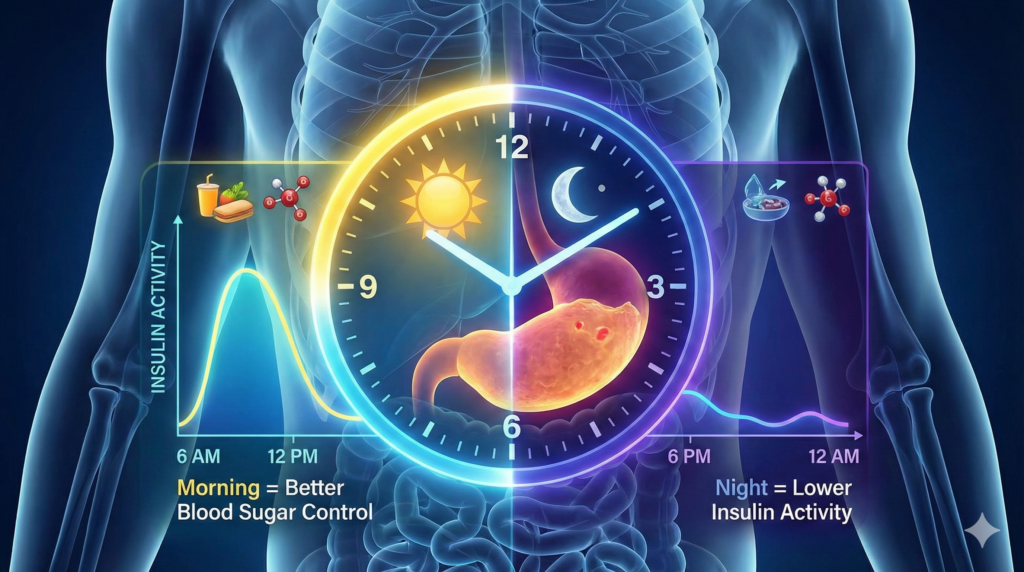
Blood sugar levels rise after you eat. But your body handles this better during the day than at night.
Why? Because insulin—the hormone that manages blood sugar—works more effectively in the morning.
So, if you eat a big meal late at night, your blood sugar might stay high longer. This can increase the risk of type 2 diabetes.
A study published in Cell Metabolism found that people who ate all their meals within a 10-hour window (like 8 a.m. to 6 p.m.) had better blood sugar control—even without changing what they ate.
That means meal timing alone can make a big difference!
Common Meal Timing Mistakes (And How to Fix Them)
Many of us make simple meal timing errors without realizing it. Here are a few—and how to fix them:
Skipping Breakfast
Some people skip breakfast to “save calories.” But this can slow down your metabolism and make you overeat later.
Fix: Even a small breakfast—like fruit and yogurt—can reset your body clock and give you energy.
Late-Night Snacking
Midnight snacks feel harmless. But they confuse your body’s internal clock.
Fix: Try to stop eating 2–3 hours before bed. If you’re hungry, drink water or herbal tea instead.
Irregular Lunch and Dinner Times
Eating lunch at 1 p.m. one day and 4 p.m. the next makes your body work harder to adjust.
Fix: Pick a rough window for meals (e.g., lunch between 12–1 p.m.) and stick to it most days.
Best Practices for Healthy Meal Timing

Good meal timing doesn’t mean you need a strict schedule. But a few smart habits can go a long way.
- Eat breakfast within an hour of waking up. This tells your body it’s time to be active.
- Have lunch around midday. Your metabolism is strong, so you’ll use that energy well.
- Finish dinner early. Aim to eat 2–3 hours before bedtime.
- Limit eating to a 10–12 hour window. For example, 7 a.m. to 7 p.m. This gives your body a nightly “fast” to rest and repair.
These habits are part of a strategy called time-restricted eating, which is linked to better weight control and improved heart health.
How Shift Workers Can Manage Meal Timing

Shift workers face a tough challenge. Their work hours often clash with natural body rhythms.
Because of this, their meal timing is usually off. They might eat at 3 a.m., when their body expects sleep.
But small changes can help:
- Try to eat your main meals during daylight hours, even if you’re sleeping then.
- Avoid heavy meals right before your daytime sleep.
- Use blackout curtains and consistent sleep routines to support your rhythm.
The National Institute of General Medical Sciences offers helpful tips for shift workers to stay healthy despite odd hours.
Simple Tips to Improve Your Meal Timing Today
You don’t need a complete diet overhaul. Just start small:
- Set meal reminders on your phone.
- Prep meals ahead so you’re not tempted to eat late.
- Listen to your hunger cues, but don’t confuse boredom with hunger.
- Avoid screens while eating—this helps you notice when you’re full.
Over time, your body will thank you. Better meal timing means better sleep, more energy, and fewer cravings.
Final Thoughts
Your body isn’t just counting calories—it’s watching the clock, too. Meal timing is a powerful tool that shapes your circadian rhythm and metabolic health.
By eating at consistent times and avoiding late-night meals, you help your body stay in sync. And when your body clock is happy, so are you!
So tonight, try eating dinner a little earlier. Tomorrow, don’t skip breakfast. Small changes in meal timing can lead to big health wins.
FAQ: Your Questions About Meal Timing Answered
1. What is the best time to eat breakfast?
The best time is within 1 hour of waking up. This jumpstarts your metabolism and aligns with your circadian rhythm.
2. Can poor meal timing cause weight gain?
Yes. Eating late at night or at irregular times can slow metabolism and increase fat storage. Consistent meal timing helps your body burn calories more efficiently.
3. Is it okay to skip dinner?
It depends. If you’ve eaten balanced meals earlier and aren’t hungry, it’s fine. But regularly skipping meals can confuse your body clock and lead to overeating later.
4. How does meal timing affect sleep?
Eating too close to bedtime can cause indigestion and disrupt sleep. On the other hand, good meal timing supports deeper, more restful sleep.
5. Should I follow a strict eating schedule?
Not necessarily. But aiming for a consistent 10–12 hour eating window (like 8 a.m. to 6 p.m.) can support your health without feeling too rigid.
References:
- Harvard Medical School: How Food Affects Your Circadian Rhythms
- National Institute of General Medical Sciences: Circadian Rhythms
- Cell Metabolism: Time-Restricted Eating Study
Note: Always consult a doctor or nutritionist before making big changes to your diet or meal schedule.
Read Articles:
Front-Loading Calories for Better Metabolism and Energy
Eat More Morning Calories for Better Blood Sugar