blurred vision diabetes young adults – young person squinting at phone with warning text overlay
Blurred vision diabetes young adults — it’s not just screens. High blood sugar harms the eyes. Spot early signs, protect your sight. Learn what to do now.
Blurred Vision Diabetes Young Adults? Get Checked Now
Hey there!
If you’re in your 20s and your vision’s been acting weird — blurry, foggy, or just “off” — you might think, “Ugh, too much Netflix again.” But what if it’s not your screen? What if it’s something deeper… like diabetes?
Yes, really.
Blurred vision diabetes young adults is more common than you think. And no, it’s not “just an old person thing.” More and more people in their 20s are getting diagnosed with Type 2 diabetes. And one of the sneakiest early signs? Blurry eyes.
Let’s break this down — simply, clearly, and without the scary medical jargon.
What Causes Blurred Vision in Young Adults?
First off, blurred vision can be caused by many things.
You might be wondering what’s causing your blurry vision. Well, first off, it could be something simple. Maybe you need new glasses — after all, prescriptions do expire. Or maybe you’re just super tired, and your eyes are begging for a break. Then again, maybe you’ve been staring at your phone for 8 hours straight — guilty, right? We’ve all been there.
But here’s the thing: if your vision stays fuzzy even after you’ve rested, stepped away from the screen, or updated your glasses… it might be time to think deeper. Because sometimes, blurred vision in your 20s isn’t about screens or sleep — it could be your body’s quiet cry for help.
But… if your vision stays blurry for days — or keeps coming back — and you’re also feeling thirsty, tired, or peeing a lot… your body might be trying to tell you something.
High blood sugar — which happens in diabetes — can mess with your eyes. And that’s where “blurred vision diabetes young adults” becomes super important.
How Does Diabetes Affect Your Eyes?
Okay, let’s get simple.
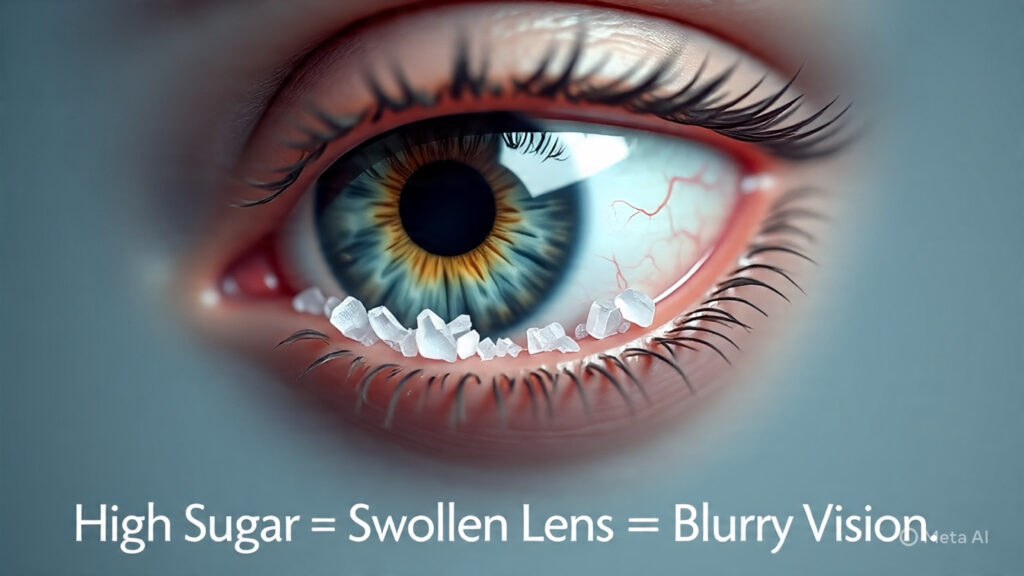
When your blood sugar stays high for too long, your body gets confused. Sugar starts leaking into places it shouldn’t — like the lens of your eye.
The lens is the part that helps you focus. When sugar builds up there, it swells. And when it swells? Things look blurry.
This is often called “diabetic blurriness.” And guess what? It’s usually temporary… at first.
But — and this is a big BUT — if high blood sugar keeps going unchecked, real damage can start. Tiny blood vessels in your eyes can get weak, leaky, or even blocked. That’s when things get serious.
This condition is called diabetic retinopathy. It’s the leading cause of blindness in working-age adults. And yes — that includes people in their 20s and 30s.
Scary? A little.
Preventable? Absolutely.
Why Are Young Adults at Risk?
You might be thinking, “Diabetes? At 25? No way.”
But here’s the truth: Type 2 diabetes is no longer just for older folks.
Thanks to lifestyle changes — less movement, more processed food, stress, and poor sleep — young adults are getting diagnosed more than ever.
According to the CDC, 1 in 5 adults with diabetes doesn’t even know they have it. And many of them are under 35.
Blurred vision diabetes young adults is often one of the first red flags. But because we blame screens or stress, we ignore it.
Don’t.
Signs You Shouldn’t Ignore
You might notice your vision is blurry… but that’s not the only clue your body could be dropping. In fact, other sneaky signs often show up before or alongside the blurriness — and they’re easy to miss if you’re not paying attention.
- For starters, you might feel super thirsty — like, all the time, even after chugging two water bottles.
- Also, you could be peeing way more than usual — especially waking up at night just to go. Annoying? Yes. Normal? Not really.
- Even worse, you might feel totally wiped out — yes, even after a solid 8 hours of sleep. Your body’s running on empty, and you don’t know why.
- On top of that, small cuts or bruises take forever to heal. A tiny paper cut? Still there after a week. That’s not laziness — that’s a red flag.
- Sometimes, you might feel tingling or numbness in your hands or feet — like they’ve fallen asleep, but… not really. Creepy? Yep. Worth checking? Absolutely.
- And here’s a big one: sudden weight loss without trying. No new diet. No gym obsession. Just… poof. Clothes getting loose? Don’t celebrate yet — get checked.
If you’re ticking off more than one? Please, go see a doctor.
A simple blood test can check your sugar levels. It takes 5 minutes. And it could save your eyes — or even your life.
What Should You Do If You’re Experiencing Blurred Vision?

Step 1: Don’t panic.
Step 2: Don’t ignore it.
Step 3: Book a check-up.
Your eye doctor (optometrist) can check for eye-related issues. But if they suspect diabetes? They’ll send you to your GP or a specialist.
Blood sugar can be tested with:
- Fasting blood glucose test
- HbA1c test (shows your average sugar over 3 months)
- Random glucose test
All of these are quick, easy, and often covered by insurance.
Early detection = easier control = less damage.
How to Protect Your Eyes (and Your Health)

Good news: You’re not helpless.
Even if you’re at risk — or already diagnosed — you can protect your vision.
Eat Smart
Cut back on sugary drinks, white bread, and fast food. Load up on veggies, whole grains, lean proteins, and healthy fats.
Your eyes (and your waistline) will thank you.
Move More
You don’t need to run a marathon. Just 30 minutes of walking, dancing, or cycling most days can lower your blood sugar naturally.
Sleep Well
Poor sleep = higher stress = higher blood sugar. Aim for 7–8 hours. Put the phone away an hour before bed. Your eyes will rest — and so will your body.
Get Checked Regularly
If you have diabetes, get your eyes checked every year — even if your vision feels fine. Damage can happen silently.
The American Diabetes Association recommends annual dilated eye exams for all diabetics.
Real Stories: Young Adults Who Caught It Just in Time

Meet Priya, 27.
She thought her blurry vision was from working late on her laptop. But after 3 weeks, it didn’t get better. She went to the doctor, and her blood sugar was sky-high. Turns out, she had Type 2 diabetes.
After changing her diet, walking daily, and taking meds, her vision cleared up — and her health improved big time.
Or take Jay, 24.
He ignored his thirst and fatigue for months. By the time he got checked, his eyes already showed early signs of damage. He’s okay now — but he wishes he’d acted sooner.
These stories aren’t rare. They’re becoming normal.
Don’t wait until it’s “bad enough.” Act now.
Myths About Blurred Vision and Diabetes
Let’s bust some myths, shall we?
❌ Myth: Only overweight people get diabetes.
✅ Truth: Thin people can get it too. Genetics, stress, and lifestyle all play a role.
❌ Myth: If I feel fine, I don’t have diabetes.
✅ Truth: Diabetes can be silent. Blurred vision might be your only warning.
❌ Myth: Once your vision blurs, it’s too late.
✅ Truth: Often, it’s reversible if caught early. Permanent damage? That’s what happens when you wait.
FAQ: Blurred Vision Diabetes Young Adults
Q1: Can blurred vision from diabetes go away?
Yes! If caught early and blood sugar is controlled, vision often returns to normal. But don’t wait — the longer you ignore it, the higher the risk of permanent damage.
Q2: How fast can diabetes affect your eyes?
It can start within weeks of uncontrolled high blood sugar. But serious damage usually takes months or years. That’s why early action is key.
Q3: Can I prevent diabetes if it runs in my family?
You can’t change your genes — but you can change your habits. Healthy eating, regular movement, and good sleep slash your risk — even with family history.
Q4: Should I see an eye doctor or a general doctor first?
Start with your GP. They can test your blood sugar. If it’s high, they’ll refer you to a specialist. Your eye doctor can also spot warning signs and send you for testing.
Q5: Is blurred vision always diabetes?
Nope. It can be dry eyes, needing glasses, migraines, or even stress. But if it’s paired with other symptoms (thirst, fatigue, etc.), diabetes should be ruled out.
Final Thoughts: Your Eyes Are Warning You

Blurred vision diabetes young adults isn’t a “maybe.” It’s a “maybe you should check.”
Your 20s are for living — not for losing your health. Don’t brush off blurry eyes as “just screen time.” Listen to your body. Get tested. Take action.
Your future self will high-five you for it.
Helpful Links:
- American Diabetes Association – Diabetic Eye Disease
- CDC – Diabetes and Vision Loss
- Mayo Clinic – Diabetic Retinopathy
Related Articles
Unexplained Weight Loss Diabetes 20s? Act Fast Now
Tired all the time? Early diabetes symptoms in your 20s
Early Signs of Diabetes in Women — Spot Them Now
Type 2 Diabetes in 20s: Why It’s Rising & How to Stop It
Fatigue and Diabetes in Young Adults — Test Now, Not Later
Frequent urination and thirst, diabetes: check your sugar now
Slow Healing Wounds Diabetes Young? Check Sugar Now





I don’t think the title of your article matches the content lol. Just kidding, mainly because I had some doubts after reading the article. https://www.binance.info/register?ref=IHJUI7TF